


Source: Nigeriansinsouthafrica.com
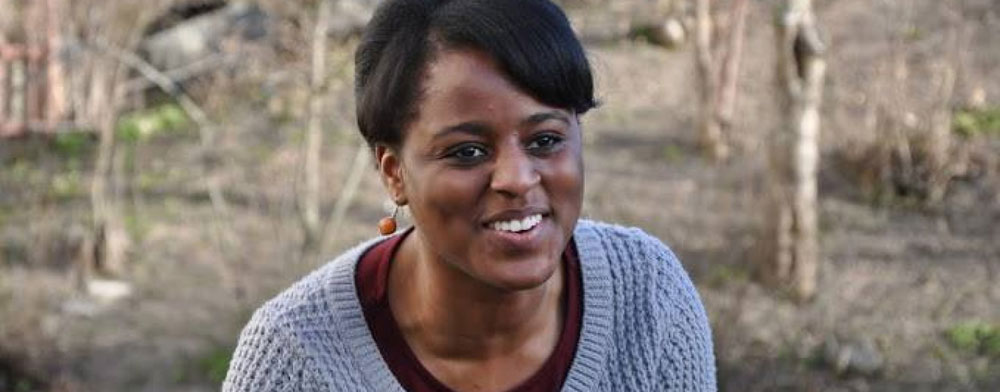
Growing up in South Africa, I was always reminded by those around me that I was different to everyone else. In primary school, I had a much darker complexion than I do now, and super white teeth – the telling marks of a foreigner that betray you even when you put on your best English accent. It is just too obvious.
My name is Lovelyn Chidinma Nwadeyi. I am a Nigerian. Born in Nigeria to two Nigerian parents. Raised in Queenstown, Eastern Cape by those same Nigerian parents right up until I completed my Bachelors at Stellenbosch. I bear citizenship of both worlds. I speak fluent Xhosa, Igbo, Afrikaans and English. I can make sense of Tswana and Sotho. I enjoy a good braai, I love vetkoeks, especially the bunny-chow, I can’t get enough of Bokomo WeetBix, I love Ouma’s rusks and I can pull off my panstulas with any outfit on a lazy Saturday when I want to head to town. I am the first to break it down with the ngwaza and the dombolo at the sound of some decent house music or kwaito be it in Pick n Pay or at a party.
I can sokkie and I enjoy it (all be it with my two left feet), my darkest moments can be reversed by koeksusters and a cup of rooibos tea any day. I can jump between the high pitched and arguably annoying accents of some Constantia moms, the lank kif and apparently sophisticated English of my Hilton brothers and the heavy accents of my fellow Eastern Capers, I can attempt the fast paced, lyrical Afrikaans of my coloured brothers in the Cape and I can serve you the best butternut soup you have ever known. I am as South African as you need me to be.
But my ability to navigate all these spaces did not just happen. Learning to blend into all these spaces was a matter of survival for me. You see from the day I set foot in Queenstown and started primary school, it was always made very clear to me that I was an outsider. I only had white friends from my first few years in school, because the other black girls couldn’t understand why I was black but only spoke in English. They thought I thought I was better than them. So I spent most of my breaks humbly eating my peanut butter and strawberry jam sandwich, surrounded by those who had Melrose cheese and Provita Crackers with Bovril and/or marmite sandwiches in their lunchboxes. The rest of the time I spent alone, save the few brave souls of similar complexion who tried to befriend me.
What nobody knew was that for the first three years of my life in SA, my little brother and I barely saw my dad up to twice a month. What was he doing absent from the home, other than selling pillowcases, duvets and bedsheets, from door to door on foot through the streets, villages and side roads of the old Transkei and Ciskei? My father would leave the house on Monday mornings after him and my mom got us ready for school, and he would be gone for days and weeks, selling the few pillowcases and bedsheets he had from door to door. On foot. We were never sure when he would return. But when he did, we were always more grateful for his safety and aliveness than anything else.
From Queenstown. To Cala, Umtata, Qumbu, Qoqodala, Whittlesea, Mount Fletcher, Kingwilliamstown, Mdantsane, Bhisho, Indwe, Butterworth, Aliwal North and even as far as Matatiele and Kokstad. There are so many other places he went to that I do not even know.
That is how my parents put us through school, until they saved up enough money to open their own little shop where they then started selling sewing machines, cotton and then community phones, then sweets and chips and take aways and then hair products and the list goes on and on.
It was on this that I was able to go through primary school, high school, and university. My parents have no tertiary education, it was only until their late 40s that both of them decided to register for part-time studies at Walter Sisulu to get their Diplomas.
Note: Diplomas.
It took them four years, because they were busy trying to keep their kids in school, and keep selling their sweets and sewing machines while attempting to dignify their efforts with a degree.
My story is not unique, it is the story of most foreigners in South Africa. Very few foreigners come into SA with skills that make them employable here. Unless you are a medical doctor, an academic and maybe an engineer or well established businessman before coming here, your chances of getting meaningful employment in SA are as limited as those of the United States letting Al-Qaeda members off the hook – almost impossible.
Most foreigners come to SA with the ability to braid hair, carve wood, or sell fruits, veges, clothes, fizz pops, carpets and soap before they can find their feet here. Some are graduates…but what can another African degree do for you in SA? And any foreigner in SA will tell you that that is the truth. All of us started from below the bottom. Doing work that carries no dignity, no respect and very little financial gain. But when you have left or lost everything that you know and love and end up in a foreign land as unwelcoming in its laws and restrictions as South Africa, you have little choice available to you.
I can bet you that there is not up to 10% of South Africans who would be willing to do the menial and embarrassing work my parents and other foreigners did for as long as they did it and for as little as they did it were you to ask them today. So it annoys me, to the deepest part of my being when I see a South African open their mouth and cry “foul” against innocent foreigners. Let’s discuss this.
Arachnophobia – the fear of spiders.
Claustrophobia – the fear of small/tight/enclosed spaces.
Xenophobia – the fear of foreigners.
However individuals who are afraid of spiders do not go around killing spiders, rather they avoid spiders. Equally, individuals who are afraid of small and tight spaces do not go around trying to eliminate the existence of small spaces.
Thus xenophobia does not by definition imply the killing of foreigners. Yet, we continue to label this current wave of killings and murders in SA as xenophobic – and now the cooler term – “Afrophobic” attacks. Can we please just get real? What is happening in SA is a genocide, a genocide fuelled by a deep-seated hatred for which no single foreigner is responsible.
Before, you say this is too extreme, allow me to explain.
Genocide is the systematic/targeted killing of a specific tribe or race.
In South Africa’s case, this would be the senseless killings of non-South Africans, mostly those of African origin and some Pakistani, Bangladeshi and other non-African minorities.
I think the government, South African and international media are being too cowardly to call it what it is. They know what is going on in South Africa and yet they refuse to acknowledge it for fear of who knows what. Is it because there numbers are not high enough? Should we wait until a few good hundred thousand foreigners have been murdered before we speak the truth?
So now the value of human lives is being reduced to a debate on politically correct terms and phrases to protect certain interests. People are being butchered in the streets, and the country is worrying about bad PR. I hate that now, on Facebook, Twitter, Instagram, everyone is now trying to say, “Oh no, it’s not all South Africans that are doing this, hey. Just a few of those people there.” South Africans are trying to distance themselves from what is happening in their own backyards as though it is of any consolation to those watching their family members being sizzled in rubber rings. As if that is what matters – true South African style.
This is not the first wave of attacks of this nature in South Africa. In fact, the 2008 attacks were much worse in terms of raw numbers of casualties suffered than these have been so far. The issue of xenophobia is not a new one in SA. However, the differentiator in 2015 is that this wave is backed by a strong ideology; that somehow these attacks can be and are justified.

An ideology that sees merit in the argument that foreigners are stealing the jobs of locals, that they are stealing their women, that these “makwerekwere” are the cause of most ills in South African society.
It is a shame how uninformed and how baseless these arguments are.
Foreigners do not and CANNOT steal jobs in SA. Do you know how hard it is to get South African papers, just to get into the country – not to talk of getting a work permit and convincing any company to take on the cost of employing you as a foreigner? Unless you have some freaking scarce skills in the country – it just does not happen like that.
Secondly, just shut up and stop it. South Africans who embibe these arguments are lazy. There is a disgusting entitlement that is attached to this notion that jobs can be stolen. This implies that there are jobs waiting for you – of which there are none.
There are no freaking jobs waiting for anyone. Pick up a bucket and start washing cars. Put on your shoes and walk through your streets, sell tomatoes, eggs and tea – anything people eat, they will buy. Or pick up a book, hustle your way into university, work for a scholarship and get yourself an education. But stop this senselessness. Nobody is stealing your jobs.
I got my first job when I was 11 years old. I worked on the school bus in my town. I collected money for the bus driver, wrote out receipts and kept order on the bus. I didn’t get paid much, but it helped me learn first that nothing comes easy, I learnt to be responsible and accountable to someone else. Secondly it helped me pay for little extramural expenses I did at school which were not the priority for my parents at the time (and rightly so). In varsity, even though I had a tuition bursary, I worked two part time jobs and one contract job for the entire three years at Stellenbosch so I could pay for my feeding, my clothes, some additional materials etc. Yes my parents supported me as best they could, but naturally, part of growing up is that you don’t bother your parents for every Rand you need.
So people see me and my family now, several years later driving a decent car and living in an average house and they say, “Ningama kwekwere, asinifuni apha. Niqaphele, aningobalapha.”
“You are foreigners, we do not want you here. You better watch out, you are not of this place,” – unaware of and unwilling to hear of the years of struggle and hustle that came with the decent car and the average house. [Which, by the way, you can never fully own as SA law now restricts ownership of property by foreigners – but that is another discussion.]
And what has been the government’s response to the worsening unemployment and crime situation in the cities and suburbs that incites this violence and dissatisfaction amongst its people? To tighten immigration laws, border controls and any little room the foreigner may have had to just maybe survive in the menacing streets of Johannesburg. As if that is where the problem began.
Is it not the way our economy is structured? That there is limited room for unskilled labour in the workforce? That those who are not vocationally trained must then settle for employment outside of their existing areas of knowledge such as artisans, plumbers and electricians – whereas these skills are equally needed in a developing economy? That we have this stupid thing called BEE which in practice just ensures that the Black bourgeoisie get wealthier by hook or by crook while still protecting and cushioning the impact of democracy on old, white money and big business?
Is it really the little Ethiopian man with his spaza shop that is threatening your progress na Bhuthi? Is it really the Nigerian woman who braids hair and sells Fanta that is stealing your job and place in your own land na Sisi? I can’t deal.
If none of these arguments have merit for you, then think of the fact that during apartheid, Nigeria spent hundreds of dollars on the ANC protecting and moving its members across borders, Angola, Mozambique, Tanzania, Burundi, Zambia, Zimbabwe, Botswana, Kenya, Rwanda, Uganda all housed, supported and/or trained struggle heros with open arms and with no strings attached. How dare South Africans forget how much Africans did for them during apartheid. How dare you!
South Africans, go and learn your history.
When you have read your history, then please teach the correct version to your children. Let them know that Africa helped put SA where it is now. Let them know that all blacks are not Xhosa or Zulu, but that that is irrelevant to the amount of dignity you accord to another human being. Teach your children that they must work for everything they want to have except your love as a parent. Teach your children that they are nothing without their neighbour – stop being selective about who Ubuntu applies to and does not. Teach them the truth about you.
The greatest enemy of the black man has always been himself. Not the colonialists. Not the apartheid architects. Only himself.
And as long as you refuse to take responsibility for where you are now, you will remain there. Kill us foreigners or not, it actually makes very little difference to your fortunes in life, people of Mzansi.
My Thoughts on Phobias…and the Genocide Taking Place in South Africa,


13 Comments
The problem is that South Africa itself is grappling with corruption and huge gaps between its economic classes. The country has its own issues to resolve. It is a traumatised nation of whose majority poor has no exposure or even sufficient education. The people running away from the failures of their government should not expect a miracle in South Africa which continously fails it’s people. There is no reprieve in South Africa black people stay in your countries and fix your problems do not run away from them!! Nigeria for example rivals SA in its GDP ..why would anyone leave a country with such a high GDP? Corruption. Then take it down..as some idealists would say because even SA is corrupt. Fix your homes do not run away!
Xenophobia: a conundrum for SA
April 19 2015 at 07:00am
By Susan Booysen
Comment on this story
iol news pic Si Susan Booysen xeno INDEPENDENT MEDIA The march against xenophobia in Durban this week. The writer says one of the effects of the governments open-border policy is that foreigners take some of the blame for its delivery deficits. Picture: Sibusiso Ndlovu
Attacks on foreigners by socio-economically deprived citizens, squeezed by the realities of global migration, are an indictment on the government, writes Susan Booysen.
Johannesburg – The government was being held to ransom this week – caught in a grip between morally indefensible xenophobia, global migration and acknowledging that grassroots feelings against foreigners, largely African, have roots in the dented dream of democracy.
An escalation of ongoing xenophobia since 2008, rather than a new outbreak, the week’s anti-foreigner events held up a mirror for South Africans and their government. The events were a microcosm of much that has gone wrong in the globally-linked democratic South Africa and reflected uncomfortable realities of citizen reaction to having lost both the 1994 ideal and the trust that the government will make things right.
By this weekend, the spread of Afro-xenophobic attacks around the country indicted the perpetrators. These citizens suffer socio-economic deprivation and relate their real or imagined experiences of disrespect and deficits to their inability to compete with foreigners.
They are squeezed by the harsh realities of global migration, while they are still clutching at the fruits of their national liberation.
The outbreaks reminded us that many community protests include criminals who loot because they can. Chances are, they will not be brought to book because communities shield them, police look on, release follows arrest.
Even more, the week brought evidence of marauding mobs hungry for violent confrontation – also with those who denounce xenophobia. The dishonour, however, extends beyond these underclasses to the middle classes, who live aloof from the suffering that comes with ongoing poverty and emasculation in the race for scarce resources.
The week’s events were inescapably also an indictment of the government. To be sure, it gave a formidable display of what can be done if political will arrives. The week’s concerted government actions and declarations contrasted with non-existent government repertoires when xenophobic cases of the past six years had been swept under the community protest carpet.
The chickens of the de facto policy of open borders came home to roost. The president’s parliamentary announcement of sharper border control confirmed the prevailing policy failure (besides appearing as using a teaspoon to stem a tide).
In place of feeble responses, the government this week delivered two presidential interventions, the security cluster stepped in and specific ministers launched reprimands, anti-xenophobic campaigns and deployed more police and other security forces. There was heightened humanitarian action and refugee (née displacement) centres sprang up.
The ANC, Cosatu and SACP issued statements and held briefings to condemn killing and looting.
The government met ambassadors of countries whose citizens were affected.
If this hive of activity had been unfolding regularly in the past six years, South Africa might have escaped much of the embarrassment of being a contender for skunk of the year. There was a display of leadership, even if Parliament, the cabinet and the president might have little standing with the perpetrators.
Of course, not all of this week’s government actions were exemplary. Feeble rhetoric repeated itself. Criminality and national disgrace became “unacceptable”, rather than “morally reprehensible”.
King Goodwill Zwelithini got unparalleled kid-glove treatment. President Jacob Zuma reinforced national liberation rhetoric in relating how the ANC was treated generously when in exile but ignored that, in political struggle days, it was governments hosting the ANC – its leaders often resided in middle-class suburbs, commanding their members who were in out-of-the-way camps, often being supported by the international community.
The government was silent on the fact that the xenophobic violence displaces blame for socio-economic deprivation. While African “foreigners” are blamed for at least some of the social ills permeating township and informal settlement life, including health, educational and social service infrastructure, the ANC government is apportioned less of the blame.
The middle class, generally white citizens specifically, and the ruling class obviously, benefit from blame displacement. It is foreigners’ shops that go shutters-up, not the Johannesburg Stock Exchange or Umhlanga’s Gateway Mall.
Middle-class life in South Africa continued unaffected, while the underclasses were fighting it out, except that their underpaid Zimbabwean waiters and gardeners might be on the run.
The ruling class obviously suffers being shamed by fellow African governments and embarrassed by social media rumours that everybody from Boko Haram to Renamo’s Afonso Dhlakama are set to launch rescue missions.
The ANC government obviously does not “design” its policy of open borders with a view to getting paperless foreigners to come and help share blame for delivery deficits. But it is certainly one of the de facto effects of the policy of limited control of immigration from African countries.
This is besides the fact that the influx and the added stress on social services strain the fiscus, from which the ANC government then suffers. Meanwhile, cheap and docile (fearing deportation) labour helps capital.
Afro-patriotic, pan-Africanist and universalist rhetoric flowed to try to subdue xenophobic bouts in which the Afrophobia seemed to include shopkeepers, traders and other small-business operators from the Indian subcontinent, those who operate in the physical world of the underclasses.
Zuma noted that “we cannot accept that when there are challenges, we then use violence, particularly to our brothers and sisters from the continent”. ANC treasurer-general Zweli Mkhize reminded South Africans “we are all children of Africa”. The thought lingered that had the 2008 perpetrators been arrested and charged, the xenophobia label would not have been sticking so well. The soothing words would have had gravitas.
By all appearances, the government lacks the will to reverse the influx of foreign citizens. As much as its management is out of control, the problem is likely to have become irreversible.
From a policy perspective, the vexing question is, why does South Africa maintain open borders to citizens from Africa? Is it selective enforcement of both border and immigration control and law enforcement? Is it lack of capacity and ineptitude?
Foreigners get absorbed into the national social-services network while they trade, operate small businesses or, on the darker side of life and alongside many South African counterparts, thrive on crime.
There is a lumpen-proletariat underworld in which life is cheap, and xenophobia is but one expression of the laws of that world.
The government has lost authority over vast tracks of South Africa, over the underworld where xenophobia, looting and parading mobs rule. Research at the time of the 2008 outbreaks pointed to an anarchic world, with its own priorities and competing elusive power structures. From high-level bribes and huge drug deals to usurious microloans and coercive local political systems, it runs parallel to anything official, democratic and constitutionally legitimate.
The small miracle of the week is that concerted action led to the violence and looting being subdued.
This week’s xenophobia was a case of two-sided lawlessness: foreigners unofficially entering and drawing on South African social infrastructure plus lawlessness in terms of seeking real or imagined revenge, looting and killing by a minority substantial enough to earn South Africa scoundrel status around the world.
Lawfulness still has a modest edge over lawlessness in South Africa, even if much of society – middle classes included – often display a wonderfully lawless side.
This lawlessness has roots in the fact that the constitution’s Bill of Rights offers no absolute guarantees. It is a “law” that does not dictate. There follows a legal system that functions at some levels, but often not at all, and a system of policing in which citizens do not trust their “protection officers”.
Or, think of a Human Rights Commission that this week found a little voice again to pronounce on xenophobia but has been largely silent on the personal and systemic devastation that poverty and unemployment wreak in South Africa.
This all unfolds under the watch of a government that proclaims that tolerance of foreign citizens is part of paying back to our continental brothers and sisters for their part in the liberation struggle… forgetting for a moment that neither Zimbabwe nor Somalia helped much; Mozambique and Ethiopia did. This motivation nevertheless helps the ANC prolong the legacy of the liberation struggle, increasingly its predominant lever on legitimacy.
Alternatively, it could very well be a case of the government not having the authority and capacity to correct the situation to ensure that a lawful, law-abiding South Africa takes shape. South Africa’s struggling but comparatively big economy is a capitalist magnet and “informal foreigners” have even become employers of note.
South Africa’s tides of April exposed the extent to which its “battle for economic liberation” unfolds in the firm grip of global economic migration, flights of repression and chaos, and a national government that strains to try to gain control.
* Booysen is professor at the Wits School of Governance.
NB: Last but not least, if people have a problem with South Africans the way they want their country to be manage they are free to leave, full stop! Nobody is force to stay here. And there were only about 350 000 South Africans in exile through out the world, some in African countries, some in the UK, US, Canada, New Zealand and Australia and they stayed in Refugee camps! Foreigners have even a freedom of speech here in South Africa something that they don’t even have in their own countries!
This makes for interesting reading.
Kunta Roots Kinte
EXPELLED FOREIGNERS POURING OUT OF NIGERIA By The Associated Press
Published: May 5, 1985
LAGOS, Nigeria, May 4— Thousands of illegal aliens, carrying mattresses, clothing and cooking utensils, poured back across the borders to their homelands today, ordered out by Nigeria’s military rulers.
The foreigners had been attracted to Nigeria in part by an oil boom in the 1970’s, but now the West African nation has deep economic problems and an increasing crime rate, which it attributes in large measure to the immigrants.
On Friday, the Government opened its borders to speed the expulsion of 700,000 foreigners. It was the first time Nigeria’s borders with Benin, Niger, Chad and Cameroon were open since April 1984, when the Government closed them to combat the black market in the country’s ailing currency, the naira.
The aliens, who were ordered out last month, were part of the second wave of foreigners to be forced from Nigeria by the Government in three years.
Reporters at the western border with Benin today said Nigerian customs officials were searching the departing foreigners closely and refusing to let tiem carry out more than the 20 naira, or $17.65, allowed by law. They also said bus drivers were doing a brisk business charging twice the normal fare to carry passengers across the border.
The illegal immigrants were among the millions of West Africans, mostly from Ghana, who flooded into Nigeria in hopes of benefiting from the country’s oil-based economy.
But world demand for oil has waned and the price has dropped, sending Nigeria into a steep economic decline and swelling its foreign debt.
In January 1983, the civilian Government of President Shehu Shagari ordered out about two million foreigners, blaming them for widespread unemployment and crime. Roads to the border were clogged with people carrying personal belongings.
Maj. Gen. Mohammed Buhari overthrew Mr. Shagari in December 1983, and last month the Buhari Government announced it was giving the remaining illegal aliens until May 10 to leave.
But until the Government opened the borders on Friday, only small groups were reported to have left on planes and ships.
The state-controlled Lagos radio reported Friday that Interior Minister Mohammed Magoro had met with ambassadors from neighboring countries whose citizens were affected by the expulsion order. The radio quoted ministry officials as saying foreigners would be driven to the borders in ministry vehicles or allowed to buy airline tickets with Nigerian currency. Ordinarily, foreigners must pay in foreign currency.
Ghanaian officials said about 300,000 of the 700,000 foreigners were migrant workers from Ghana. Officials said 100,000 were from Niger and most of the rest from Chad and Cameroon.
In addition to the attraction of Nigeria’s oil boom, many of the non-Ghanaians came to Nigeria to escape drought and the threat of famine in their home countries.
Source
UPDATE: Another twist. It seems Ghana did the same thing to Nigerians not long before.
Due to major economic concerns, along with the belief that immigrants caused or exacerbated many of the social ills plaguing Ghana and Nigeria respectively, both nations created strict anti-immigration policies. In 1969, Ghana enacted the Aliens Compliance Order, in which hundreds of thousands of immigrants, mostly Nigerian, were expelled from the country. In 1983, Nigeria introduced the Expulsion Order, in which about the government ordered over 2 million immigrants to leave, most of which were Ghanaian.
More interesting history to read about Xenophobia.
Exposing Black Consciousness Official
The rivalry between Nigeria and Ghana all started from here;
“Ghana Must Go”: The History of Ghana’s 1969 Aliens Compliance Order and Nigeria’s 1983 Expulsion Order
Due to major economic concerns, along with the belief that immigrants caused or exacerbated many of the social ills plaguing Ghana and Nigeria respectively, both nations created strict anti-immigration policies.
In 1969, Ghana enacted the Aliens Compliance Order, in which hundreds of thousands of immigrants, mostly Nigerian, were expelled from the country. In 1983, Nigeria introduced the Expulsion Order, in which about the government ordered over 2 million immigrants to leave, most of which were Ghanaian.Summary:In 1957, after Ghana gained independence, many Nigerians began migrating to Ghana. The Convention People’s Party (CPP), which had been originally affiliated with Kwame Nkrumah, had maintained a liberal immigration policy because of the party and government’s pan-Africanist orientation and the want to make Ghana the forefront of African unity. For example, in the 1960 census, immigrants made up 12 percent of the Ghanaian population of 8.4 million people and immigrants from other African countries, particularly Nigeria, constituted 98 percent of the foreign-born population.
The relationship became sour when the influx of immigrants began to shift the demographics of the country, which made people unhappy. The most widespread reason for discontent was economic competition and, also, some Ghanaians blamed immigrants for a wave of crime that occurred in the late 1960s. Thus, under former Ghanaian president Kofi Busia’s Aliens Compliance Order of 1969, Nigerians and other immigrants were forced to leave Ghana. The order required of all foreigners in the country to be in possession of residence permit if they did not already have it or to obtain it within a two-week period. Kofi Busia expelled 20,000 to 500,000 Nigerians in a time period of 14 days to 3 months.
The order angered some West African governments, especially Nigeria, Togo, Benin, Mali, Niger, Ivory Coast and Burkina Faso whose citizens were mostly affected by the expulsion. The 1969 Order also affected Ghana’s image in mainland Africa and the rest of the world.In 1983, the Nigerian government expelled 2 million Africans out of Nigeria.
Ghana was facing severe drought and economic problems, so many Ghanaians were welcomed in the 1970s by Nigeria, which was in the midst of an oil boom and in need of cheap labor. In early 1983, as the oil boom faded and Nigerians needed a group to blame for their economic and social woes, the government enacted the Expulsion Order and up to 700,000 Ghanaians were expelled from Nigeria. However, soon after, Nigerian employers allegedly invited back many deportees because they were unable to fill the vacant positions with domestic labor. Unfortunately, in May 1985, the Nigerian government again ordered an estimated 100,000 Ghanaians to be expelled from Nigeria.
This action further strained relations between the two countries .Analysis:Despite the large scale deportation of immigrants, neither country benefitted much economically from those harsh measures. As can be imagined, much confusion surrounded the actual creation and execution of the Aliens Compliance Orders (1969) and the Expulsion Order (1983) on both sides. Although the orders were technically directed at immigrants without proper documentation, many legal immigrants were forced to leave or pay astronomical bribes in order to stay. Both countries had the right to create more stringent immigration policies, but because of the nature of both orders, they fostered much animosity between the two nations and their relationship has never fully recovered from it.
-BFA
Its immoral & shameful these xenophobic & afrophobic attacks. Truly horrible. Now some African countries & Governments are saying they *want answers from South Africa* All well & good. But shouldn’t these African Governments also be asking themselves the infinitely more important & difficult question : *why their own citizens in such large numbers risk life & limb, to flee their own countries* ???
Dont only ask us! Ask yourself too!
This is a wonderful piece Lovelyn. As a Mozambican-South African (I say that loosely because I was born in Maputo and raised in South African Ghettos). I find myself in a position where I have to explain to my fellow countrymen in Mozambique about how all these killings are happen to their own people. I thought that the unity of Africans and South Africans (I say that because of the false ideology that South Africa is on the verge of becoming a first world country when its surrounded by poverty and wars!)… Solidarity, i thought that it was solidified when my aunt, Graca Machel (not really my aunt) sealed her union with the late Madiba. Surely they must have rejoiced then? I was too young to remember. Or when the south african army deployed mercenaries to the war in Zaire and Angola. What has happened since then? I know first hand at how foreigners bow lower than expected to put put parafin in a stove to boil water, or how they need to re-establish their illegal homes just so they can put a lock on their door so their kids can sleep with the illusion that they are safe at night. This is not a foreigner to national citizen struggle battle, these are struggles all black people living within these borders go through daily. There is no such thing that foreigners are taking jobs, there are certain examples like a warehouse near Diepkloof where i heard that an entire factory had hired only Zimbabweans to work there. I can understand the bitterness it must have stirred in the men and women of DK who are unemployed and are willing to work for whatever peanuts the proletarians were paid. Both are being exploited there, the Zimbabwean is exploited for his knowledge and skills. The South African is being exploited for their votes. Black struggles should be handled by black people and paid for by a third party or the strongest organisation among their people.
I have been waiting for such a post, and my have you structured it so beautifully my dear. Thank you. I just want to say that, I wish there was a way to get this message out there. Out there to the people who somehow believe that South Africa is somehow a continent on its own, outside of Africa.
Out there to the people who are clearly not educated enough to know that their barbaric acts are exactly that barbaric and and in no way can they be justified as anything else. When I read that part where you said “show me a South African who is willing to do “the menial and embarrassing work my parents did” I was nodding in approval. South Africans are so full of themselves. They are just engulfed in the ideas that people actually give a damn about what is going on in their lives (as long as you are working, shouldn’t that be enough?). They spend their whole lives wondering “I wonder what my neighbour thinks of me or I wonder what my neighbour is eating tonight” always comparing themselves to everybody else. People need to be taught about self-love and the meaning of being unique and different, maybe then they will realise that nothing is easy. Maybe then can they look in the mirror and want to better themselves. Trust me, not all South Africans are lazy. I got my first job at 12, babysitting, tutoring, columns for magazines, I worked, sometimes begged for someone to give me a job. I got myself through varsity… I worked and studied because I wanted better. Yes I am South African and 100% Zulu.
Really beautiful piece, people need to know that we do not travel the same roads and even if we do, the final destination is never the same.
I couldn’t agree with you any further Pule, the people needed to be educated of our intimate and long standing relationship with the rest of Africa – i feel such issues could be integrated into our education system or at least delivered quickly to the masses when the first/early signs showed and made it painfully clear that such violence and crime against humanity would not be tolerated – this should have been broadcast ed through public media a long time ago. But we South Africans that have this awareness should also see it as our responsibility to try inform those who are ignorant of the facts. I think this article also points out the underlying causes of this madness: http://consciousness.co.za/an-in-depth-view-of-what-fuels-xenophobia-attacks/
That is so true Lovelyn, nothing is more difficult than having to look at yourself and be brutally honest about your behaviours and actions, one thing that worries me though, and not I’m compartmentalising this, is that the people who should truelly be reading this and could stand to benefit more than anyone from doing so, actually don’t, chances are they might not even have a Facebook account, and if they do, they barely use it, ignorance has killed us, we attack what we don’t know because we believe we must do something, South Africa is in a very volatile place right now, frustrations and grudges are being misplaced, government is very relaxed about it as well, steps should have been taken years ago to avoid these senseless killings of people whom we share the same continent with
Thank you for sharing your story and your experience. thank you also for calling this what it is – genocide! Yesterday I was irritated by these reports of “xenophobia”. I was diving and I thought – why are we still calling this xenophobia – didn’t the genocide in Rwanda start the same way. A killing by spears in the bush and then another and then one million. And for what? Banana plantations they never got anyway. So yes – let us wake up to the genocide taking place now!
We South Africans need to catch a serious wake up call – being the youngest democracy we are like a child that turns its back on family that protected and raised it. We are making enemies very quickly and soon we’ll find ourselves against the ropes again with no family to rescue us from vultures we claim are our friends
Well done, you could not have said it better.
Namibia